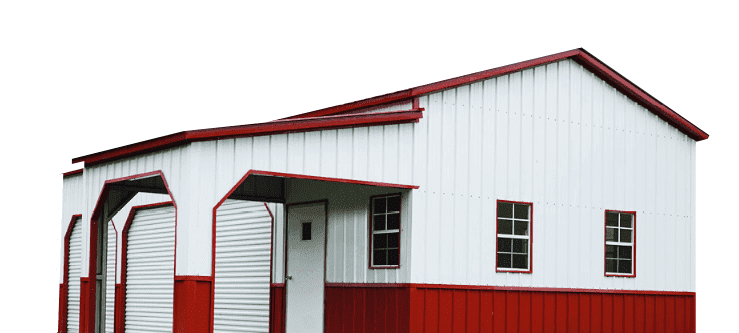

Metal Building Insulation Guide 2025
Everything you need to know about insulating your steel building—from R-values and condensation prevention to cost-per-square-foot comparisons.
46
States Served
20-Year
Warranty
1-3 Days
Install Time
Table of Contents
Why Insulate Your Steel Building?
Steel is an incredible building material, but it is a high conductor of heat. Without proper insulation, your building will be subject to extreme temperature swings and condensation issues.
"At Quality Steel Buildings, we ensure your framing is ready for whatever insulation method you choose, helping you create a space that lasts a lifetime."
Temperature Control
Keep your building cool in the summer and warm in the winter, making it usable year-round.
Condensation Prevention
Stop the “sweating” effect that occurs when warm air hits cold metal, protecting your assets from rust.
Noise Reduction
Significantly dampen the sound of rain, hail, and wind against the metal exterior panels.
Energy Savings
Reduce the workload on your HVAC system, leading to lower monthly utility bills.
The 4 Main Insulation Types
Compare the most common insulation methods for steel buildings to find the right balance of performance and budget.
Fiberglass Batt Insulation
Most PopularThe industry standard for metal buildings. It consists of flexible blankets of glass fibers, typically with a reinforced vinyl or foil facing that acts as a vapor barrier.
Pros
- Cost-effective
- Excellent sound absorption
- Easy to install during construction
Cons
- Can sag over time if not supported
- Loses R-value if it gets wet
Best For: Workshops, Garages, and Commercial Warehouses.
Technical Specs
Closed-Cell Spray Foam
Highest PerformanceA premium option that is sprayed directly onto the metal panels. It expands and hardens, creating an airtight seal and adding structural rigidity to the building.
Pros
- Highest R-value per inch
- Stops all air infiltration
- Acts as its own vapor barrier
Cons
- Most expensive option
- Requires professional installation
- Messy to apply
Best For: Climate-controlled homes, offices, and high-value storage.
Technical Specs
Rigid Foam Board
Best for RetrofitsLarge, stiff panels made of polystyrene or polyisocyanurate. These are often installed between the framing and the metal skin or added to existing buildings.
Pros
- Consistent R-value
- Easy to cut and fit
- Provides a clean interior look
Cons
- Requires careful sealing at joints
- Can be bulky to transport
Best For: Finished interiors and DIY retrofits.
Technical Specs
Reflective / Double Bubble
Best for CondensationA thin layer of air bubbles sandwiched between two layers of reflective foil. It works by reflecting radiant heat rather than just slowing conductive heat.
Pros
- Stops 97% of radiant heat
- Zero moisture absorption
- Extremely easy to handle
Cons
- Low conductive R-value
- Requires an air gap to work effectively
Best For: Carports, RV covers, and unheated barns.
Technical Specs
What is R-Value and Why Does it Matter?
R-value measures an insulation material's resistance to heat flow. The higher the R-value, the better the material is at preventing heat from entering or leaving your building.
The Golden Rule
"The Higher the R-Value, the Better the Performance."
However, you don't always need the highest R-value. A storage building in Florida has different needs than a workshop in Montana.
DOE Guidelines
Based on Department of Energy recommendations for energy efficiency.
ASHRAE Standards
Aligned with industry standards for commercial building ventilation and cooling.
Recommended R-Values by Climate Zone
| Climate Zone | Region Example | Target R-Value |
|---|---|---|
| Zones 1-2 | FL, TX, AZ | R-13 to R-19 |
| Zones 3-4 | NC, TN, CA | R-19 to R-25 |
| Zones 5-6 | OH, NY, CO | R-25 to R-30 |
| Zones 7-8 | MN, ND, AK | R-30 to R-38 |
*Note: These are general recommendations for climate-controlled spaces. For unheated storage, a lower R-value or simple reflective barrier may be sufficient.
What is Thermal Bridging?
Thermal bridging is a process where heat bypasses your insulation by traveling through the highly conductive steel frame of your building. Even with thick insulation between the studs, the studs themselves act as "bridges" for heat to escape or enter.
Thermal Blocks
Placing high-density foam strips between the framing and the metal panels.
Continuous Insulation
Adding a layer of rigid board over the entire frame before the skin is applied.
Double Layer Systems
Using a combination of batt insulation and a reflective barrier.
Visualizing Thermal Bridging
Vapor Barriers & Condensation
In a metal building, a vapor barrier is just as important as the insulation itself. Without it, warm air from inside the building will pass through the insulation and condense on the cold metal skin, leading to mold, mildew, and structural rust.
3 Vapor Barrier Rules for Steel Buildings
-
1
Always install the vapor barrier on the “warm side” of the insulation.
-
2
Ensure all seams are taped with high-quality vapor barrier tape.
-
3
Never leave gaps around windows, doors, or corners.
The vapor barrier stops moisture before it hits the cold metal skin.
Insulation by Building Type
Not every building needs the same level of protection. Find the recommended insulation strategy for your specific structure.
Steel Garage
Fiberglass Batt (R-13)
Perfect for protecting vehicles and creating a comfortable space for light car maintenance.
Steel Barn / Horse Barn
Reflective Foil
Focuses on condensation prevention and radiant heat reflection to keep livestock comfortable.
Workshop / Hobby Shop
Rigid Foam Board
Provides a clean interior look and consistent temperature for long hours of work.
Commercial Warehouse
Fiberglass Batt (Vinyl Faced)
The most cost-effective way to insulate large square footage while meeting building codes.
Metal Carport / RV Cover
Reflective Double Bubble
Stops condensation from dripping on your vehicles without the bulk of traditional insulation.
Utility / Storage Building
Reflective Foil
Prevents moisture damage to stored goods at the lowest possible price point.
QSB provides the framing for all these building types, ready for your insulation choice.
Metal Building Insulation Cost Guide
Understanding the cost per square foot helps you budget for your total project. These estimates include material costs and typical professional installation.
| Insulation Type | Est. Cost / Sq. Ft. |
|---|---|
| Reflective Foil | $0.50 - $1.00 |
| Fiberglass Batt (Single Layer) | $0.80 - $1.50 |
| Fiberglass Batt (Double Layer) | $1.50 - $2.50 |
| Rigid Foam Board | $1.25 - $2.25 |
| Spray Foam Open-Cell | $1.50 - $2.50 |
| Spray Foam Closed-Cell | $2.50 - $4.50 |
*Costs are estimates only and vary by region, building height, and current market material prices.
Building Size
Larger buildings often see lower per-square-foot costs due to bulk material pricing.
Your Location
Labor rates and material availability vary significantly by state and proximity to suppliers.
Timing
Installing insulation during initial construction is significantly cheaper than retrofitting later.
The 'best' insulation depends on your building's use and climate. For workshops and garages, Fiberglass Batt or Rigid Foam Board are excellent choices. For climate-controlled commercial spaces, Closed-Cell Spray Foam offers the highest R-value and best moisture protection. Reflective insulation is ideal for simple carports or barns where condensation prevention is the primary goal.
Costs typically range from $0.50 to $3.50 per square foot depending on the material. Reflective foil is the most affordable ($0.50-$1.00), while Closed-Cell Spray Foam is the most expensive ($2.00-$3.50) but provides the highest performance.
Yes, but it is often more difficult and expensive. Installing fiberglass batt or reflective insulation is easiest during the initial construction phase. If your building is already standing, spray foam or rigid board are the most common retrofit options.
No. Quality Steel Buildings provides insulation-ready steel framing, delivered and installed across 46 states. The insulation material itself and its installation are handled by the customer or a third-party contractor after the building is erected.
R-value requirements depend on your climate zone. Warm climates (Zones 1-2) typically require R-13 to R-19, while cold climates (Zones 5-8) often require R-25 to R-38 for fully heated spaces. Refer to our Climate Zone table for specific recommendations.
Condensation occurs when warm, moist air hits a cold metal surface. To prevent this, you must use a continuous vapor barrier. Reflective 'double bubble' insulation or closed-cell spray foam are the most effective ways to stop condensation in steel buildings.
Yes, provided it includes a high-quality vapor barrier facing (like vinyl or foil). Without a vapor barrier, fiberglass can trap moisture against the steel panels, leading to rust and mold.
Thermal bridging occurs where the steel frame (a highly conductive material) passes through the insulation layer, allowing heat to bypass the insulation. Using thermal blocks or continuous rigid board insulation helps break this bridge.
Standard unfaced home insulation is not recommended for metal buildings because it lacks the necessary vapor barrier to prevent condensation against the metal skin. Always use insulation specifically designed for metal building applications.
Absolutely. Metal buildings can be noisy during rain or hail. Fiberglass batt and open-cell spray foam are excellent at absorbing sound, significantly reducing exterior noise and interior echoes.
Get a Steel Building That's Insulation-Ready
Quality Steel Buildings provides the high-quality framing you need to insulate effectively. Delivered and installed across 46 states.
*Reminder: QSB provides the steel building and framing. Insulation materials and installation are handled by the buyer separately.